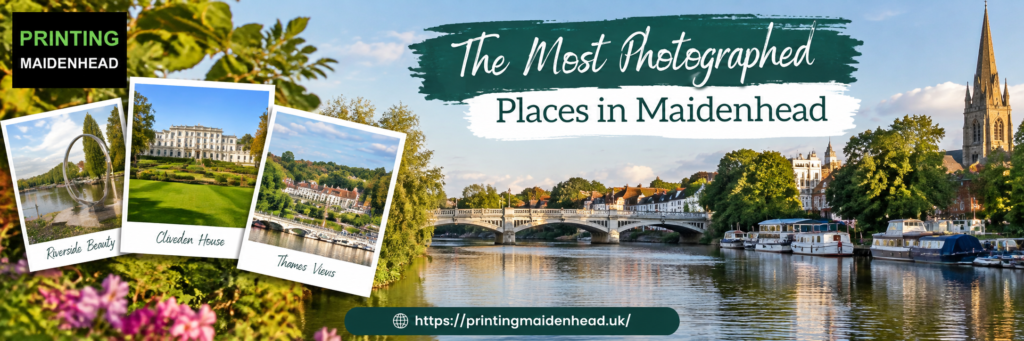
Maidenhead has plenty of places that encourage people to stop and take a photograph. The River Thames is an obvious part of the town’s identity, but photography around Maidenhead also covers historic bridges, parks, railway heritage, town-centre streets and everyday community life. These images are taken by residents on walks, visitors exploring the area, local organisations recording events and businesses creating content for websites and social media.
Photography also has a practical link with printing. A good local photograph can become a poster for an event, an image in a brochure, a display for a shop, a postcard, a large-format print or part of promotional material. For printing Maidenhead, this connection between local places, photography and printed material is especially relevant to community groups, independent businesses, schools, clubs and event organisers.
Maidenhead Bridge and the River Thames
The River Thames provides some of the most natural photography locations around Maidenhead. Maidenhead Bridge is particularly useful for photographs because it combines the river with a recognisable piece of local history. The present stone bridge opened in 1777, although river crossings played an important part in Maidenhead’s development long before then.
Views around the bridge change throughout the year. Walkers may photograph boats, reflections on the water, riverside activity or the bridge itself. Early mornings, summer evenings and quieter winter days can all produce very different pictures of the same location.
For local businesses and organisations, these photos can also help give printed material a clear Maidenhead identity. Rather than using a general stock photograph, a local image can be used for leaflet printing, brochure printing, calendars, event posters or community publications. Restaurants, clubs and businesses close to the river may also use local photography in menus, wall displays and promotional materials.
Ray Mill Island and Boulters Lock Area
The Boulters Lock and Ray Mill Island area is another part of Maidenhead where cameras and phones regularly come out. Ray Mill Island is a public riverside space and has also been the focus of community activity. The Friends of Ray Mill Island held its inaugural Community Open Day there in June 2024, attracting visitors from Maidenhead and beyond.
The combination of water, paths, trees and river activity gives people plenty to photograph without needing a planned photo session. Families may take personal pictures, while community groups can document activities and local events.
Pictures from community days can later be useful for poster printing, booklet printing and event displays. A local organisation might create a photo board showing its work, while an event organiser could use photos from one year to promote the next event. When something is needed at short notice, same day printing can also be useful for event posters, signs or information sheets.
The Maidenhead Railway Bridge and the Sounding Arch
Railway heritage gives Maidenhead another distinctive type of local scene. The railway has had a major influence on the development of the town. The arrival of the railway in the nineteenth century changed Maidenhead’s economy and helped its growth as a place where people could live while travelling to London.
The railway bridge across the Thames, associated with Brunel and commonly known for its Sounding Arch, is particularly interesting to photographers because of its large brick arches and riverside setting. It offers a very different image from Maidenhead Bridge. One represents the older road route across the Thames, while the other reflects the railway age.
Historic and architectural photographs like these work well in local exhibitions, educational projects and heritage material. Schools and local history groups may need booklet printing or large format printing to present old and new photographs together. Businesses can also use recognisable local scenes in reception displays or company brochures without making the material feel disconnected from Maidenhead.
Maidenhead Town Centre and the Clock Tower
Not every local photograph needs a riverside background. Maidenhead town centre records another side of the area’s character. High Street, King Street and surrounding streets provide opportunities to photograph shops, buildings, public spaces and community activity.
One recognisable feature is the Clock Tower on King Street, opposite the main railway station entrance. Royal Borough records state that the memorial commemorates Queen Victoria’s Diamond Jubilee, with its foundation stone laid in 1899.
The town centre itself has a long commercial history. Council heritage information notes the development of Queen Street and King Street as shopping areas during the Victorian period. Today, photographs of local shops, cafés, streets and events can provide useful material for businesses that want their marketing to show where they actually operate.
Independent traders may use town-centre photography in flyer printing, business card designs, brochures, posters or window displays. Shops holding a promotion or community event can also combine photographs with banner printing and other large-format materials.
Guards Club Park and Maidenhead’s Green Spaces
Green spaces provide a quieter type of Maidenhead photograph. Guards Club Park, beside the Thames, includes an ornate footbridge leading towards Thames Island. Council records date the bridge to around 1865 and note that it originally led to a club boathouse on the island.
This mix of greenery, river views and historic features makes the area useful for landscape and seasonal photography. Maidenhead and the wider Royal Borough also have a network of wildlife areas and public natural spaces, giving residents more opportunities to photograph local plants, wildlife and changing seasons.
Such photographs can have uses beyond personal albums. Environmental groups, schools and community projects may turn them into educational posters, information leaflets or exhibition boards. Local photographers can also prepare selected images as prints rather than leaving every photograph stored digitally.
From Local Photographs to Printed Material
Photography is often most useful when it becomes part of something people can physically see. A photograph of the Thames could become a wall poster in a Maidenhead office. Pictures from a community event might be used in a booklet. A local restaurant could use photographs of the area in its menus, while a charity could place event images in its next leaflet or banner.
Printing services in Maidenhead therefore support more than standard office material. Photo-based projects may involve poster printing, brochure printing, booklet printing, flyer printing and large format printing. Businesses attending local events may also combine photographic graphics with T-shirt printing or workwear printing to keep their visual identity consistent.
Local photographs are particularly useful because people recognise the places. An image of a river crossing, town-centre landmark or familiar green space immediately connects printed material with Maidenhead.
Conclusion
Maidenhead offers a varied mix of places for photography. The Thames and Maidenhead Bridge provide classic riverside views, while Ray Mill Island offers a greener setting. Railway heritage around the Sounding Arch brings another part of the town’s history into view, and the Clock Tower and town centre show Maidenhead’s commercial and community side.
These photographs also help record how Maidenhead changes over time. For residents they can preserve personal memories, while businesses, schools, charities and community groups can use them in posters, brochures, booklets, displays and event materials. Using genuine local photographs in print is a simple way to make information feel connected to the people and places it represents.